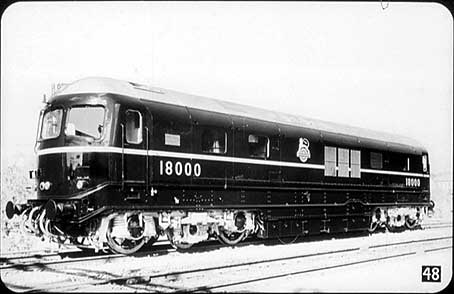
48) Here’s something else that’s new – the gas turbine locomotive. Don’t make the usual mistake and refer to it as a ‘jet’ loco – it isn’t. So far, jet propulsion, which means driving something along by expelling a high speed jet of air at the back, is only applicable to aircraft. This loco is driven by a gas turbine motor in which the large quantities of air which it inhales are compressed in a compressor and heated in a combustion chamber. The air emerges from the combustion chamber at high speed and drives a turbine, and this turbine drives an electric generator. The current which the generator makes is used to drive four traction motors, two in each bogie. The locomotive’s maximum speed-is ninety miles an hour. It is 63 feet long and weighs’ 115 tons. It can carry enough fuel for a 250-mile run. It uses diesel oil to start, and then when it is warmed up it switches over to heavy furnace fuel oil. British Railways think that this type of power unit should be much easier to maintain than (for example) a diesel engine, and that the loco will therefore be available for service on a greater number of days per year. This gas turbine loco was built in Switzerland. At the time it was ordered the Swiss engineers had already had about six years’ successful experience with the world’s first and only gas turbine locomotive which they had designed and constructed. Number 18000 will undergo very thorough tests for a long time, so that all the facts about its performance, fuel consumption and hauling capacity, freedom from mechanical trouble and so on can be discovered and studied. A gas turbine loco which will be more powerful than No. 18000 is under con-struction in this country now. ‘But no one would dream of suggesting that the age of the steam locomotive is past in Britain.